Everyone needs a haircut once in a while.
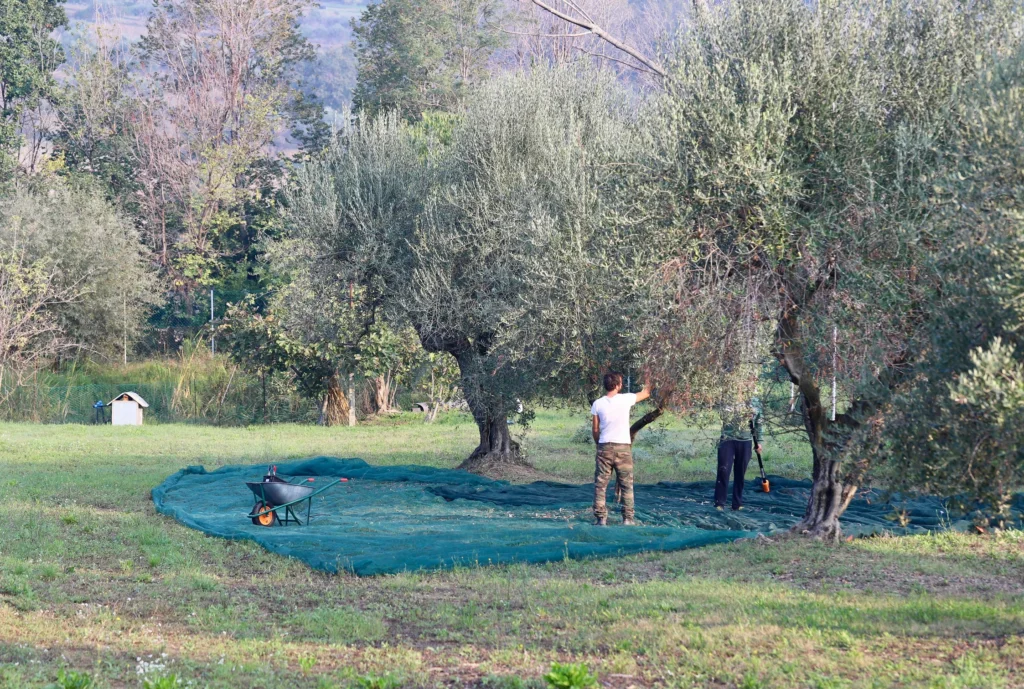
Olive Trees Need Their’s Once a year.
There is an ancient Tuscan proverb:
“Un ulivo si pota bene solo se una rondine può volare tra i suoi rami.”
Translated:
“An olive tree is pruned well only if a swallow can fly between its branches.
Practical agricultural wisdom emphasizes the importance of pruning olive trees to maintain an open structure that allows good air circulation and sunlight penetration, thereby promoting healthy growth and fruit production.
Farmers are smart, skilled, and experienced.
The ancient texts, like the stories of the olive tree in the Book of Mormon and references in the Bible (such as Romans 11:17-24), use olive trees symbolically in spiritual contexts involving pruning and grafting. But this specific proverb about swallows flying inside the tree canopy is a practical folk expression from everyday olive cultivation. It’s oral instructions being passed from generation to generation.
Tree pruning is both an art and a science. I’ve had yard workers and landscapers butcher fruit trees in the past. It’s sad. Doing the right job is important to all fruit-bearing trees. And unlike a bad haircut that will grow back in a few weeks, a bad pruning job can hurt a tree for years.
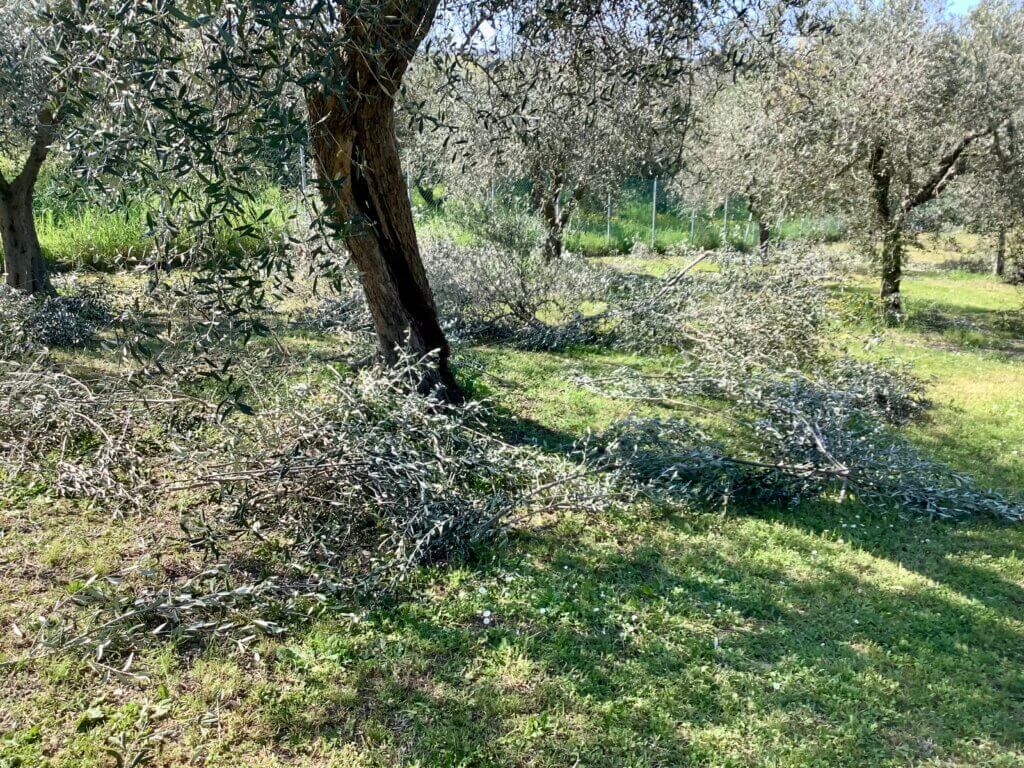
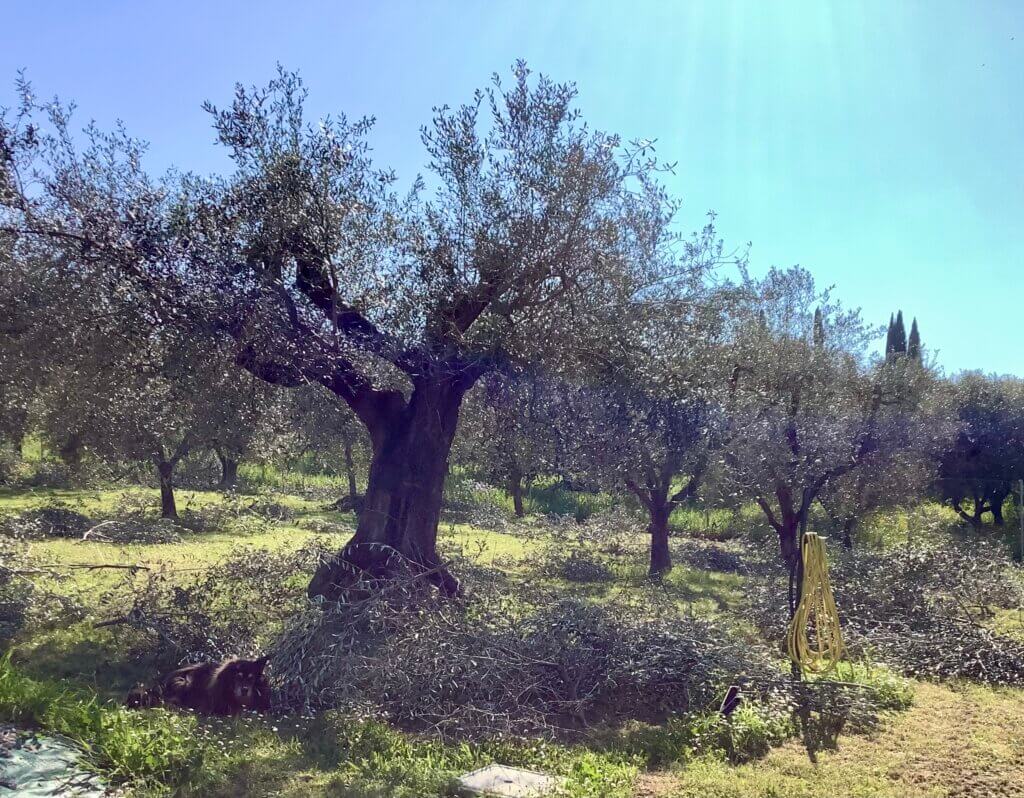
March is the month we prune. And in April, the tiny olive flowers begin the cycle to make the best oil around (so say the Italians who’ve tried my oil. Personally, of course, I’m biased.)
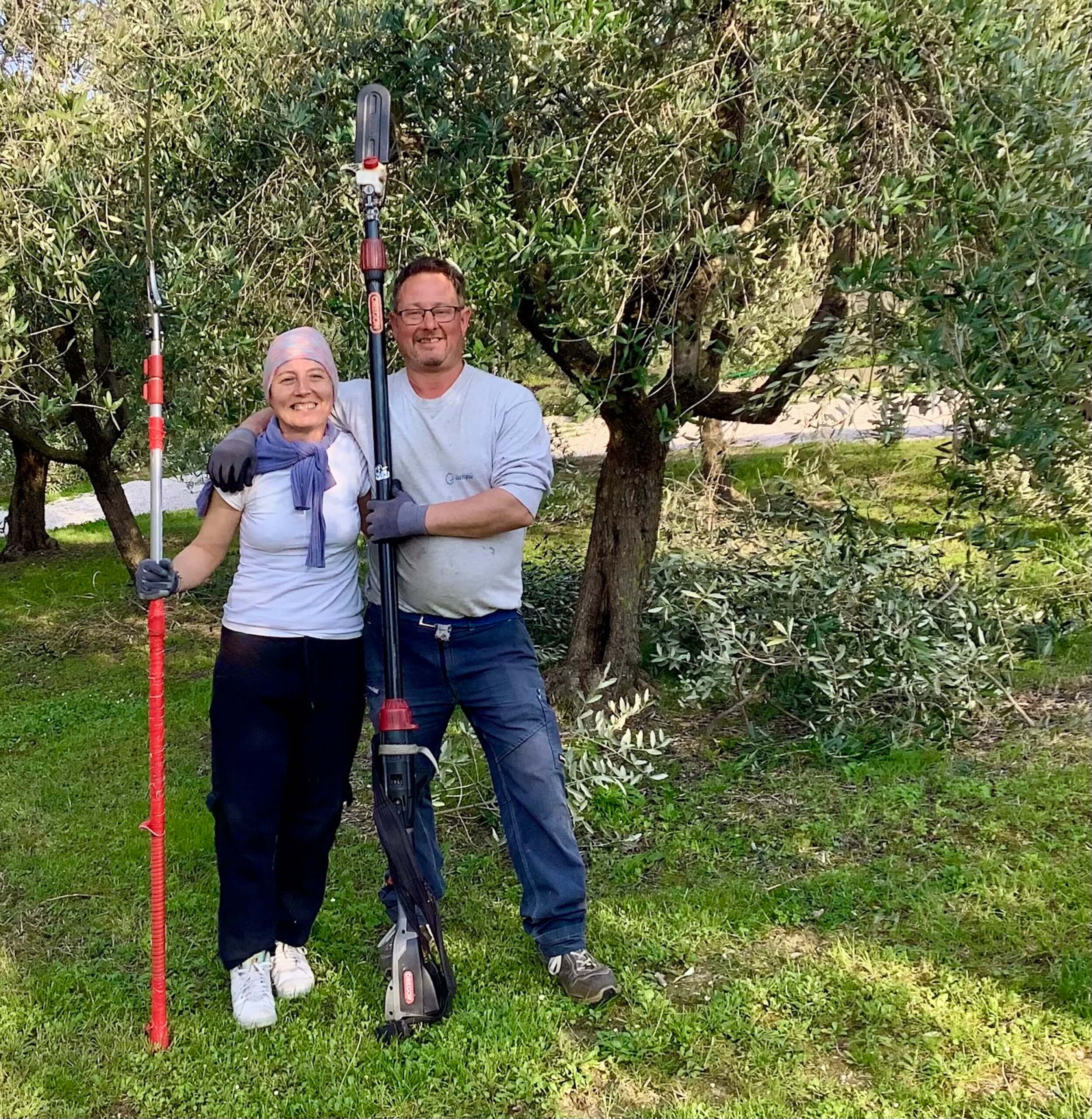
My olive trees have been pruned by the same man, Alessandro, and his father, Armando, for seven years. This year, he and his wife, Olga, did the job because his 83-year-old father was unwell. Yes, he has been pruning trees into his 80s and doing an excellent job.
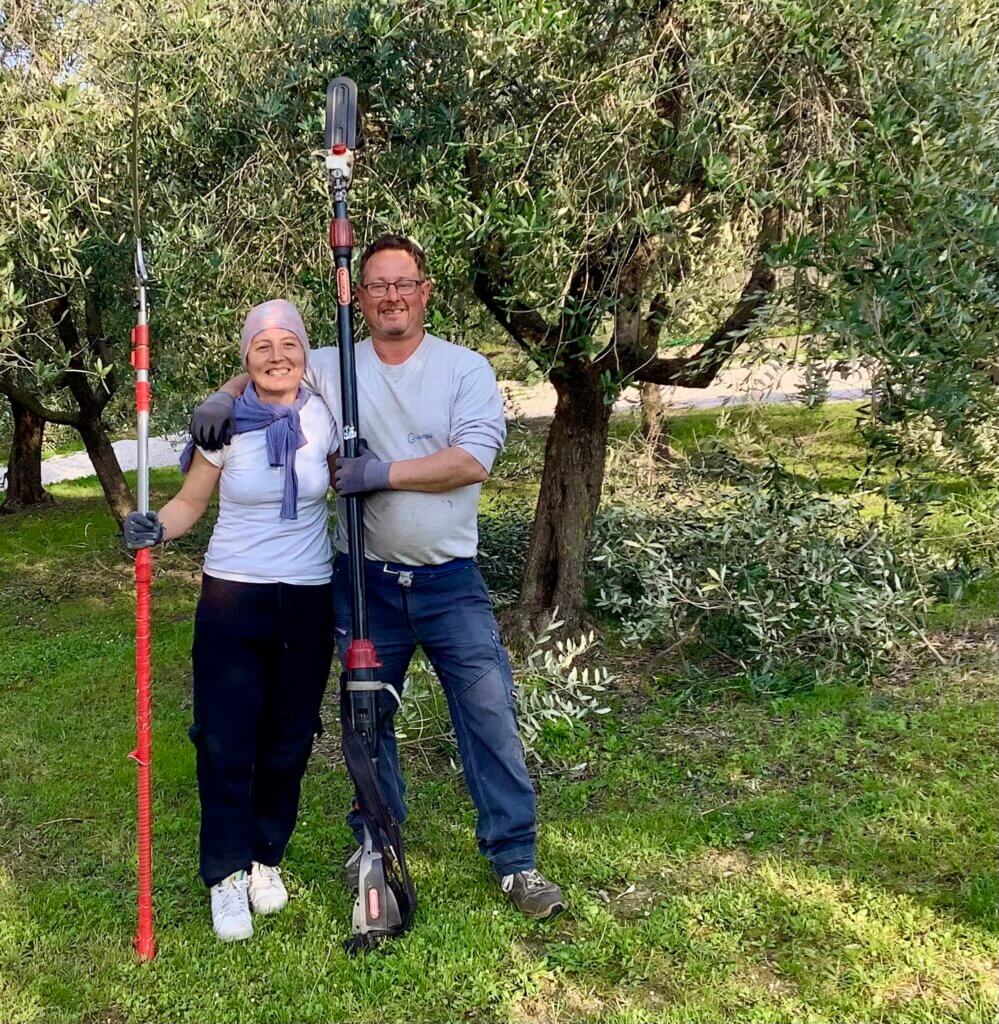
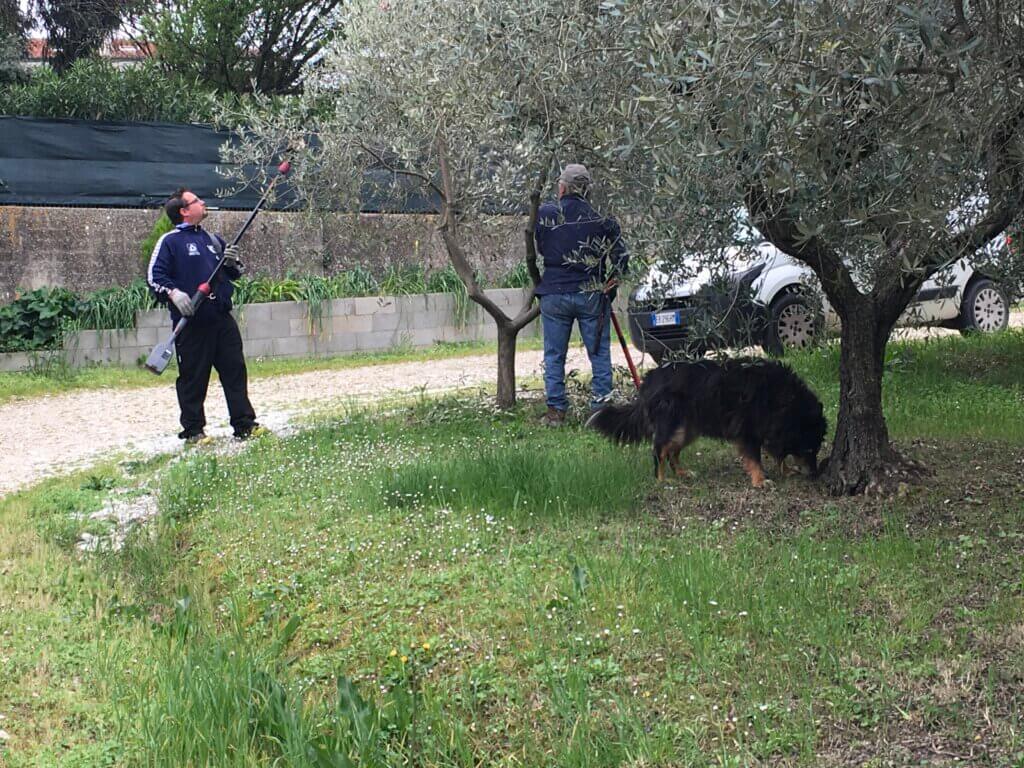
They take their time, study the trees, and get to know them. They don’t just hack away; they examine the branches to see which should stay and which should go. I hope they are my forever pruners.
If you’re in the Senigallia area, I highly recommend Allesandro. 349-868-4503
Some more Italian proverbs on Olive Tree Pruning
“Fammi povero di legno che ti farò ricco d’olio.”
“Make me poor in wood, and I will make you rich in oil.”
(A decisive, bold pruning ensures a bountiful olive harvest.)
———–
“Chi ara l’oliveto domanda il frutto, chi lo letama l’ottiene, chi lo pota lo costringe a far bene.”
“He who plows the olive grove asks for fruit, he who fertilizes obtains it, he who prunes compels it to do well.”
———–
“Ventilato sotto, spogliato sopra se vuoi che dalle spese ti copra.”
“Ventilated below, stripped above, if you want it to cover your expenses.”
(Refers to pruning lower branches for air and removing upper growth.)
———–
“Toglimi foglia e ti darò oliva.”
“Take my leaves and I will give you olives.”
(Emphasizes that removing foliage (pruning) leads to fruit.)
———–
“Olivo e fico trattali da nemico.”
“Treat olive and fig like enemies.”
(Implies aggressive pruning/frosting as necessary.
———–
“U uàrrue d’auuì cìnghe cose vole: larghe, pète, remmàte, accètte e ssole.”
“The olive tree wants five things: space, stone, manure, axe, and sun.”
(The axe refers to pruning.)